
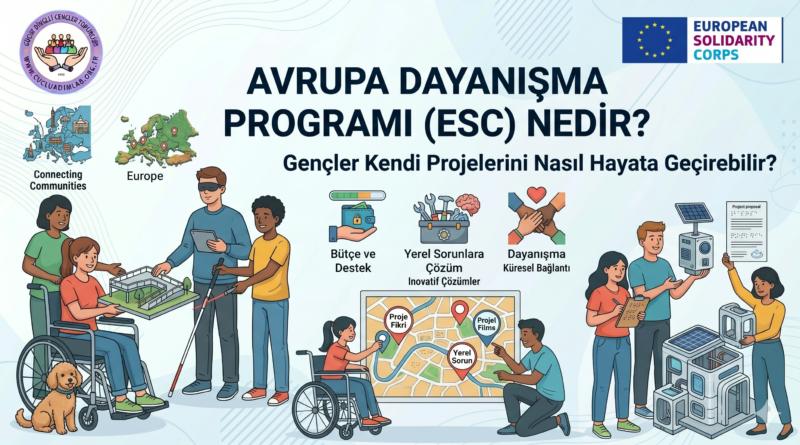
Avrupa Dayanışma Programı (ESC) Nedir? Gençler Kendi Projelerini Nasıl Hayata Geçirebilir?
Aşağıdaki yazı, talebiniz doğrultusunda Türkiye Ulusal Ajansı’nın resmi dokümanlarından yararlanılarak, gençlere hitap eden enerjik bir dille ve daha önce yüklenen “Görme Engelli Gençler Topluluğu” projesinden somut analizlerle zenginleştirilerek hazırlanmıştır.
Toplumunda bir şeyleri değiştirmek istiyorsun ama nereden başlayacağını, nasıl fon bulacağını veya kiminle iş birliği yapacağını bilmiyor musun? Yalnız değilsin! Avrupa Birliği, tam da senin gibi enerjisi olan ve yerelde fark yaratmak isteyen gençler için muhteşem bir program sunuyor: Avrupa Dayanışma Programı (European Solidarity Corps – ESC).
Bu program sadece yurt dışına gitmekten ibaret değil. ESC’nin kalbi, senin kendi mahallende, kendi şehrinde, kendi akranlarınla başlattığın Solidarity Projects (ESC30 Dayanışma Projeleri) ile atıyor.
Gel, bu programın detaylarına, bütçe desteğine ve senin gibi gençlerin bir araya gelerek nasıl devasa adımlar attığına yakından bakalım.
1. Avrupa Dayanışma Programı (ESC) Nedir?
Avrupa Dayanışma Programı, gençlerin daha kapsayıcı, daha adil ve daha sürdürülebilir bir toplum inşa etmelerine katkı sağlamak amacıyla gönüllülük yapmalarına veya kendi dayanışma projelerini geliştirmelerine olanak tanıyan bir AB girişimidir.
“Programın amacı, gençleri dayanışma faaliyetlerine katılmaya teşvik ederek toplumsal sorunları çözmelerine, becerilerini geliştirmelerine ve aktif vatandaşlar olmalarına destek olmaktır.”
— [cite: Türkiye Ulusal Ajansı – ESC Sayfası]
Türkiye’de bu programın yürütülmesinden sorumlu olan kurum Türkiye Ulusal Ajansı’dır. Program, 18-30 yaş arası tüm gençlere açıktır ve temel prensibi “dayanışma” ruhudur.
ESC’nin İki Temel Ayağı:
- Gönüllülük (ESC51): Bir kuruluş bünyesinde, yurt dışında veya kendi ülkende tam zamanlı gönüllü çalışma fırsatı.
- Dayanışma Projeleri (ESC30): Gençlerin kendi yerel topluluklarındaki bir sorunu çözmek için başlattıkları, yönettikleri ve uyguladıkları projeler. İşte bizim odak noktamız burası!
2. ESC30 Dayanışma Projeleri: Yerelde Değişimi Sen Başlat!
Dayanışma Projeleri, en az 5 gencin (18-30 yaş arası) bir araya gelerek kendi yerel topluluklarında fark yaratmak amacıyla hazırladıkları projelerdir. Bu projelerde lider tamamen gençlerdedir; projenin fikrinden raporlamasına kadar her aşamayı siz yönetirsiniz.
Bu Projelerin Temel Özellikleri Nelerdir?
- Gençler Tarafından Yönetilir: Başvuruyu yapan ve projeyi uygulayanlar bizzat gençlerdir (Bir STK, belediye veya okul size sadece “destekleyici kuruluş” olarak idari yardım sağlar).
- Yerel Odaklıdır: Proje, sizin yaşadığınız şehirdeki veya bölgedeki somut bir soruna çözüm üretmeyi hedefler.
- Kapsayıcıdır: Farklı geçmişlerden gelen gençlerin katılımını teşvik eder ve toplumun dezavantajlı gruplarına fayda sağlamayı amaçlar.
- Dayanışma Ruhu Taşır: Projenin özünde, karşılık beklemeden topluma katkı sağlama ve “birlikten kuvvet doğar” anlayışı yatar.
3. Bütçe ve Destek Mekanizmaları: AB Sizi Yalnız Bırakmıyor!
“Fikrimiz harika ama paramız yok” diyorsanız, ESC tam size göre. ESC30 Dayanışma Projeleri, AB tarafından ciddi şekilde finanse edilir. Bu fon, projenizi profesyonelce uygulamanız için gerekli olan neredeyse tüm temel maliyetleri karşılar.
Bütçe Kalemleri Neleri Kapsar?
AB’nin sunduğu bütçe desteği genellikle şu kalemlerden oluşur (Rakamlar proje süresine ve döneme göre değişebilir, resmi rehberleri kontrol etmelisiniz):
- Proje Yönetim Desteği (Harcırah): Projenin uygulanması sırasında oluşan temel masraflar (kırtasiye, toplantı ikramları, yerel ulaşım, tanıtım materyalleri vb.) için aylık maktu bir tutar. Örneğin; aylık ortalama 500-700 Euro civarında bir destek (proje süresiyle çarpılır).
- Koçluk (Coaching) Masrafları: Proje sürecinde size rehberlik edecek profesyonel bir koç (mentör) tutmak için ek bütçe talebinde bulunabilirsiniz. Koçluk desteği, projenizin kalitesini artırır ve öğrenme süreçlerinizi yapılandırır.
- Olağanüstü Masraflar: Dezavantajlı gençlerin projeye katılımını sağlamak için gerekli olan özel ekipmanlar (örneğin; görme engelli bir genç için ekran okuyucu yazılım) veya masraflar bu kalemden karşılanabilir.
“Dayanışma Projeleri, gençlerin inisiyatif alma, proje yönetimi ve liderlik becerilerini geliştirmeleri için finansal bir güvenlik ağı sunar.”
— [cite: ESC Program Rehberi – Özet Analiz]
4. Mükemmel Bir Örnek: “Görme Engelli Gençler Topluluğu” Projesi Analizi
Teorik bilgileri bir kenara bırakalım ve sizin yüklediğiniz o muhteşem projeyi (Görme Engelli Gençler Topluluğu) ESC30 çerçevesinde analiz edelim. Bu proje, bir ESC Dayanışma Projesinin nasıl olması gerektiğine dair adeta bir ders kitabıdır.
Bu Proje Neden Mükemmel Bir ESC30 Örneğidir?
- Yerel Bir Soruna Odaklanma: Proje, Burdur, Antalya ve Isparta illerindeki kamu binalarının, parkların ve kaldırımların görme engelli gençler için erişilebilir olmadığını tespit etmiştir. Bu, ESC’nin aradığı “somut yerel sorun” kriterini tam karşılar.
- Gençlerin Liderliği: Proje ekibi tamamen görme engelli gençlerden oluşmaktadır. Sorunu bizzat yaşayanlar, çözümü de bizzat kendileri üretmektedir. ESC, “bizim hakkımızda, bizsiz asla” diyen bu yaklaşımı yücelterek destekler.
- Kapsayıcı ve Eğitici Faaliyetler: Proje sadece binaları denetlemiyor; aynı zamanda görme engelli gençlere “Hak Savunuculuğu”, “Erişilebilirlik Standartları” ve “Dilekçe Hakkı” eğitimleri veriyor. Bu, projenin “öğrenme” ve “beceri geliştirme” odaklı olduğunu gösterir.
- Dayanışma ve Fark Yarama: Gençler, elde ettikleri verilerle kamu kurumlarına resmi raporlar sunarak sivil katılımın en güçlü örneğini sergiliyor. Bu faaliyet, sadece proje ekibine değil, bölgedeki tüm görme engellilere fayda sağlayarak “dayanışma” ruhunu zirveye taşıyor.
Analiz Sonucu: Eğer bu proje ekibi ESC30 fonuna başvursaydı, kamu kurumlarına sundukları raporların basımı, eğitimlerdeki ikramlar, şehirler arası ulaşım masrafları ve hatta onlara rehberlik edecek bir erişilebilirlik uzmanının koçluk ücreti AB tarafından karşılanabilirdi.
5. Kendi Projeni Hayata Geçirmek İçin 5 Adım
Sen de mahallende, okulunda veya şehrinde bir dayanışma projesi başlatmak istiyorsan, işte sana yol haritası:
- Ekibini Topla: En az 5 çılgın arkadaşını bul (18-30 yaş arası).
- Sorunu Tespit Et: Yaşadığınız yerde sizi rahatsız eden, çözüm üretmek istediğiniz bir sorunu belirleyin (Örn: Dijital erişilebilirlik, iklim krizi, sokak hayvanları, gençlerin sivil katılımı).
- Fikrini Geliştir: Bu sorunu nasıl çözeceğinizi planlayın. Hedefleriniz ne? Hangi faaliyetleri yapacaksınız? Topluma ne fayda sağlayacaksınız?
- Resmi Kayıt Ol: Ekip üyelerinin her biri Avrupa Gençlik Portalı’na kayıt olmalı ve PRN numarası almalıdır. [cite: [Gençlik Portalı Kayıt]]
- Başvuru Formunu Doldur: Türkiye Ulusal Ajansı’nın açtığı başvuru dönemlerini takip edin. Proje fikrinizi, bütçe talebinizi ve ekibinizin motivasyonunu anlatan formu doldurun ve sisteme yükleyin.
Harekete Geçme Sırası Sende!
Avrupa Dayanışma Programı (ESC30), sadece bir fon kaynağı değil; senin sivil toplumda “ben de varım” deme şeklindir. “Görme Engelli Gençler Topluluğu” projesi gibi güçlü adımlar atmak, haklarını savunmak ve yerelden başlattığın değişimle Avrupa’nın geleceğine katkı sağlamak senin elinde.
AB sana bütçe, destek ve alan sunuyor. Şimdi tek gereken, senin ve ekibinin harekete geçmesidir.
KAYNAKÇA / REFERENCES:
- Türkiye Ulusal Ajansı. Avrupa Dayanışma Programı (ESC) Sayfası ve Katılımcı Rehberleri. Erişim adresi: ua.gov.tr
- Avrupa Komisyonu. Avrupa Dayanışma Programı Program Rehberi (European Solidarity Corps Programme Guide). Brüksel. Erişim adresi: youth.europa.eu
- Avrupa Gençlik Portalı. ESC Dayanışma Projeleri (Solidarity Projects) Tanıtım Bölümü. Erişim adresi: youth.europa.eu