
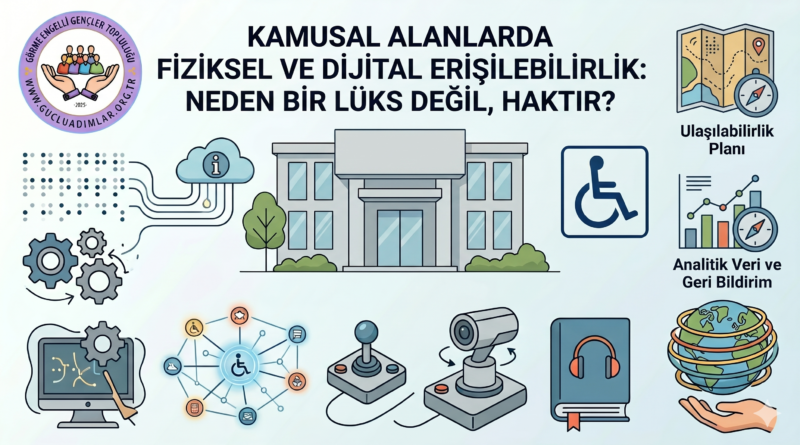
Kamusal Alanlarda Fiziksel ve Dijital Erişilebilirlik: Neden Bir Lüks Değil, Haktır?
Hiç düşündünüz mü; bir devlet dairesine girmek, parkta yürümek ya da bir belediyenin web sitesinden otobüs saatlerine bakmak kimileri için sadece saniyeler alırken, neden bazıları için aşılması imkansız birer duvara dönüşüyor?
Erişilebilirlik denildiğinde çoğumuzun aklına “engellilere yapılan bir iyilik” ya da “binalara eklenen bir lüks” geliyor. Ama işin aslı hiç de öyle değil. Görme engelli bir gencin kaldırımda güvenle yürümesi ya da ekran okuyucusuyla bir web sitesini baştan sona kullanabilmesi bir lütuf değil, en temel insan hakkıdır.
“Görme Engelli Gençler Topluluğu” olarak sahada yürüttüğümüz eğitimlerin en önemli iki konusunu, haklarımızı nasıl savunacağımızı gösteren pratik ve öğretici bir rehber haline getirdik. Hadi, haklarımızı birlikte öğrenelim!
1. BÖLÜM: Fiziksel ve Dijital Erişilebilirlik Nedir?
Erişilebilirlik tek bir boyuttan ibaret değildir. Hayatımızın kesintisiz devam edebilmesi için hem fiziksel hem de dijital dünyanın bizimle uyumlu olması gerekir.
Fiziksel Erişilebilirlik
Sokaklar, kamu binaları, otobüs durakları ve parklar… Görme engelli bir bireyin buralarda bağımsızca hareket edebilmesi için sarı kılavuz çizgilerin (hissedilebilir yüzeyler) doğru yerleştirilmesi, sesli sinyalizasyon sistemlerinin çalışması ve merdiven kenarlarında Braille (kabartma) etiketlerin bulunması gerekir.
“Erişilebilirlik; engellilerin, diğer bireylerle eşit koşullarda fiziksel çevreye, ulaşıma, bilgi ve iletişim teknolojilerine ve sistemlerine erişiminin sağlanmasıdır. Erişilebilirlik olmadan, engelli bireylerin topluma tam katılımı imkansızdır.”
— BM Engellilerin Haklarına İlişkin Sözleşme (UNCRPD), Madde 9
Dijital Erişilebilirlik
Günümüz dünyasında internete erişememek, dünyadan soyutlanmak demektir. Bir web sitesinin veya mobil uygulamanın görme engelli dostu olması için; görsellerin arkasında ekran okuyucuların okuyabileceği alt metinlerin (alt-text) bulunması, butonların doğru etiketlenmesi ve klavye ile kolayca gezilebilmesi gerekir.
Ulusal mevzuatımız da bu konuda oldukça nettir:
“Kamu kurum ve kuruluşlarına ait resmi web siteleri, engellilerin erişilebilirliğine uygun hale getirilir.”
— 5378 Sayılı Engelliler Kanunu, Geçici Madde 3
2. BÖLÜM: Görme Engelli Gençler İçin Hak Savunuculuğu
Burdur, Antalya ve Isparta gibi illerimizde yaptığımız saha incelemelerinde gördük ki; kanunlar var olsa bile uygulamada hala çok büyük eksiklikler var. Peki, bir kaldırımda sarı çizgi kesintiye uğradığında ya da bir kamu kurumunun web sitesinde işlem yapamadığımızda ne yapacağız? Oturup birilerinin bunu fark etmesini mi bekleyeceğiz? Kesinlikle hayır!
Hak savunuculuğu tam olarak burada başlar. Hak aramanın en yasal, en etkili ve en güçlü yolu resmi dilekçe hakkını kullanmaktır.
3. BÖLÜM: Adım Adım Etkili Bir Dilekçe Nasıl Hazırlanır?
Resmi kurumlara yazacağınız bir dilekçenin dikkate alınması ve hızla çözüme kavuşması için uymanız gereken altın kurallar şunlardır:
Adım 1: Doğru Muhatabı Belirleyin
Sorununuz hangi kurumun sorumluluk alanındaysa dilekçeyi doğrudan o kuruma hitaben yazmalısınız. (Örn: Sokaktaki kaldırımlar için Belediye Başkanlığına, bir okulun erişilebilirliği için İl Milli Eğitim Müdürlüğüne).
Adım 2: Durumu Net ve Somut Şekilde Tespit Edin
“Şehirdeki kaldırımlar kötü” gibi genel ifadeler yerine; “X Mahallesi, Y Caddesi üzerindeki kamu binasının önündeki hissedilebilir yüzeyler aşınmıştır ve kesintiye uğramaktadır” gibi net adres ve durum bilgisi verin.
Adım 3: Hukuki Dayanaklarınızı Ekleyin (Dilekçenizin Silahıdır!)
Dilekçenizin altına mutlaka 5378 Sayılı Engelliler Kanunu ve BM Engellilerin Haklarına İlişkin Sözleşme maddelerini ekleyin. Kurumlar karşılarında kanunu bilen gençleri gördüklerinde süreci çok daha hızlı yürütürler.
Adım 4: Net Bir Süreç ve Talepte Bulunun
Dilekçenizin sonunda, sorunun giderilmesini ve 3071 Sayılı Dilekçe Hakkının Kullanılmasına Dair Kanun gereğince yasal süresi içinde tarafınıza yazılı bilgi verilmesini talep edin.
Uygulamalı Örnek: Erişilebilirlik Dilekçe Şablonu
Aşağıdaki şablonu kopyalayıp, kendi şehrinizdeki sorunlara göre düzenleyerek ilgili kurumlara gönderebilirsiniz:
Plaintext
T.C.
.................... BELEDİYE BAŞKANLIĞINA
(Örn: BURDUR BELEDİYE BAŞKANLIĞINA)

KONU: Kamusal Alanda Fiziksel Erişilebilirlik İhlali ve Düzenleme Talebi

AÇIKLAMALAR:
İl sınırlarınız içerisinde yer alan ................................................................ (Buraya caddenin, parkın veya binanın açık adresini yazın) adresinde, görme engelli bireylerin bağımsız ve güvenli hareketini sağlayan hissedilebilir yüzeylerin (sarı kılavuz çizgilerin) bulunmadığı / hasarlı olduğu / kesintiye uğradığı tespit edilmiştir.

Söz konusu durum, görme engelli bir genç olarak şahsımın ve diğer engelli bireylerin kamusal alana güvenli ve eşit katılımını engellemekte, can güvenliğimizi riske atmaktadır.

HUKUKİ DAYANAKLAR:
1. 5378 Sayılı Engelliler Kanunu’nun 7. Maddesi: "Yapılı çevrenin engellilerin erişebilirliğine uygun kılınması zorunludur."
2. BM Engellilerin Haklarına İlişkin Sözleşme (UNCRPD) Madde 9 (Erişilebilirlik).

SONUÇ VE TALEP:
Yukarıda belirtilen adresteki erişilebilirlik engelinin 5378 Sayılı Kanun standartlarına uygun olarak ivedilikle giderilmesini; yapılan çalışmalar ve alınan kararlar hakkında 3071 Sayılı Dilekçe Hakkının Kullanılmasına Dair Kanun uyarınca yasal süresi (30 gün) içinde tarafıma yazılı olarak bilgi verilmesini saygılarımla arz ve talep ederim.

Ad-Soyad: .......................................
Tarih: .... / .... / 2026
T.C. Kimlik No: .......................................
Adres: ..............................................................................
Telefon: .......................................
İmza:
Sonuç: Değişim Bizim Ellerimizde!
Unutmayın dostlar; erişilebilirlik standartlarını talep etmek bir rica değil, hakkımızın peşine düşmektir. Haklarını bilen, resmi süreçleri doğru yöneten ve sivil katılımın gücüne inanan gençler olarak sokakları da, dijital dünyayı da herkes için eşit hale getireceğiz. Harekete geçin, hakkınızı savunun!
KAYNAKÇA / REFERENCES:
- Mevzuat Bilgi Sistemi (2005). 5378 Sayılı Engelliler Kanunu. T.C. Cumhurbaşkanlığı İdari İşler Başkanlığı. Erişim adresi: [suspicious link removed]
- Birleşmiş Milletler (2006). Engellilerin Haklarına İlişkin Sözleşme (UNCRPD). Erişim adresi: un.org
- W3C Web Erişilebilirlik Girişimi (WAI). Web İçeriği Erişilebilirlik İlkeleri (WCAG 2.2). Erişim adresi: w3.org/WAI
- Mevzuat Bilgi Sistemi (1984). 3071 Sayılı Dilekçe Hakkının Kullanılmasına Dair Kanun. Erişim adresi: mevzuat.gov.tr